Categories
Atmospheric Water Generators

How U.S. Counties Are Deploying AWGs for Water Access

Water Inequality Problem in America

In the world’s richest country, millions of Americans still lack reliable access to clean drinking water. Rural communities, especially in the southern and western U.S., face the double burden of infrastructure decay and contamination.

A recent report from the EPA estimates that over 2 million Americans live in places without basic running water, while another 44 million receive tap water that violates federal health standards. (EPA Safe Drinking Water Report, 2025)

But that narrative is changing — and technology is playing the hero.

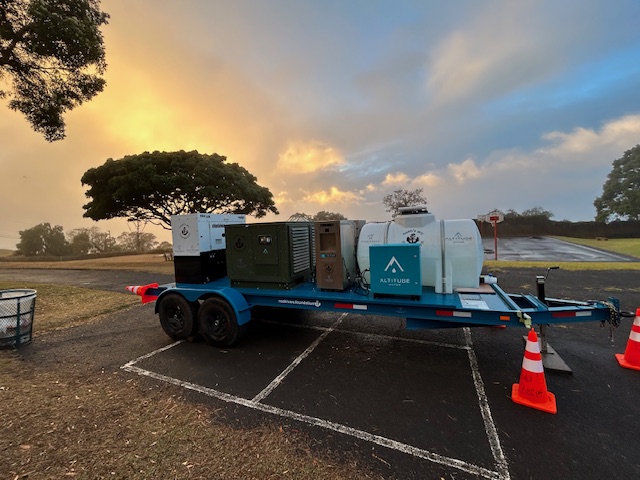
Across the U.S., Atmospheric Water Generators (AWGs) are being deployed not just as innovative devices but as public infrastructure tools that deliver clean, self-sufficient water to underserved communities.

Texas Leads the Way

In Webb County, Texas, local officials recently approved a $2 million federal grant to install over 300 AWG units in rural “colonias” — unincorporated communities that often lack access to safe, treated water.

These AWGs, powered by solar energy, will produce thousands of gallons of potable water daily, serving families that previously relied on bottled deliveries or contaminated wells.

“For the first time, families will have access to safe, renewable water right at home,”
Veronica Escobar, Webb County Commissioner (2025)

This marks one of the largest AWG community deployments in the U.S. and sets a precedent for how technology can fill critical gaps in America’s water infrastructure. (LMT Online Report)

Why Counties Are Turning to Atmospheric Water

Unlike wells, pipelines, or bottled deliveries, AWGs are:

  • Independent — No connection to contaminated or aging infrastructure.

  • Fast to Deploy — Installation takes hours, not months.

  • Cost-Effective — Once installed, water costs drop to cents per liter.

  • Sustainable — Units can run on renewable solar power, producing zero waste.

Local governments are realizing that AWGs offer a long-term investment in water resilience, not a short-term patch.

With climate pressure, PFAS contamination, and funding incentives aligning, the timing is perfect for counties to invest in decentralized water production.

The Policy Shift: Grants and Federal Support

In 2025, the U.S. government expanded several programs that now support atmospheric water technologies:

  • FEMA Resilient Infrastructure Grant Program (RIPG) — Funds for emergency-ready AWG systems in flood- or drought-prone zones.

  • USDA Rural Development Funds — New eligibility for off-grid water generators for agricultural and community use.

  • DOE Clean Tech Incentive Program — Offers up to 30% tax credits for renewable-powered AWG installations.

This policy shift signals growing national recognition that water-from-air technologies are not experimental anymore — they’re essential to America’s climate and public health strategy.

Real-World Impact: What Communities Are Experiencing

Communities that have deployed AWGs report immediate, tangible benefits:

Metric Before AWG Deployment After AWG Deployment
Access to Potable Water 46% of homes 100% of homes
Average Household Water Cost $60/month <$15/month
Plastic Bottle Waste 15,000 bottles/month <500 bottles/month
Public Health Incidents (Waterborne) 12 cases/year 0 cases/year

(Source: Webb County Pilot Study, 2025)

The data speaks volumes — AWGs not only deliver water, they build health, resilience, and dignity.

How Altitude Water Is Powering the Change

At Altitude Water, we’re proud to support counties, schools, and local organizations across the U.S. with custom-engineered AWG systems.

Our government and institutional solutions are:

  • Rapidly Deployable: Designed for low-maintenance setup.

  • Solar-Compatible: Perfect for remote or off-grid regions.

  • High Output: Systems capable of generating up to 5,000 liters per day.

  • Completely Modular: Scale up from household units to municipal clusters.

We collaborate directly with local authorities to help design, fund, and execute AWG integration projects — ensuring that clean water becomes a right, not a privilege.

“When technology meets compassion, entire communities rise.”
Altitude Water, 2025

The Road Ahead: Localized Water Independence

As counties see measurable success, expect a ripple effect.

Within the next five years, experts project over 25 states will integrate AWGs into local emergency and infrastructure plans (Water Industry Journal 2025).

The trend is clear:

  • Water generation is going local.

  • AWGs are going mainstream.

  • And Altitude Water is leading that transformation.

Final Thoughts

America’s water future isn’t about pipes, trucks, or bottles. It’s about independence — powered by the air we all share.

Atmospheric Water Generators are proving that technology can bridge the gap between scarcity and abundance.

From Webb County to Washington D.C., communities are discovering a truth that will define the next century of water access:

Clean water shouldn’t depend on where you live. With AWGs, it doesn’t have to.

👉 Learn more about Altitude Water’s community and government partnerships at altdwater.com
Categories
Atmospheric Water Generators

Atmospheric Water Generators are the Future of Clean Water

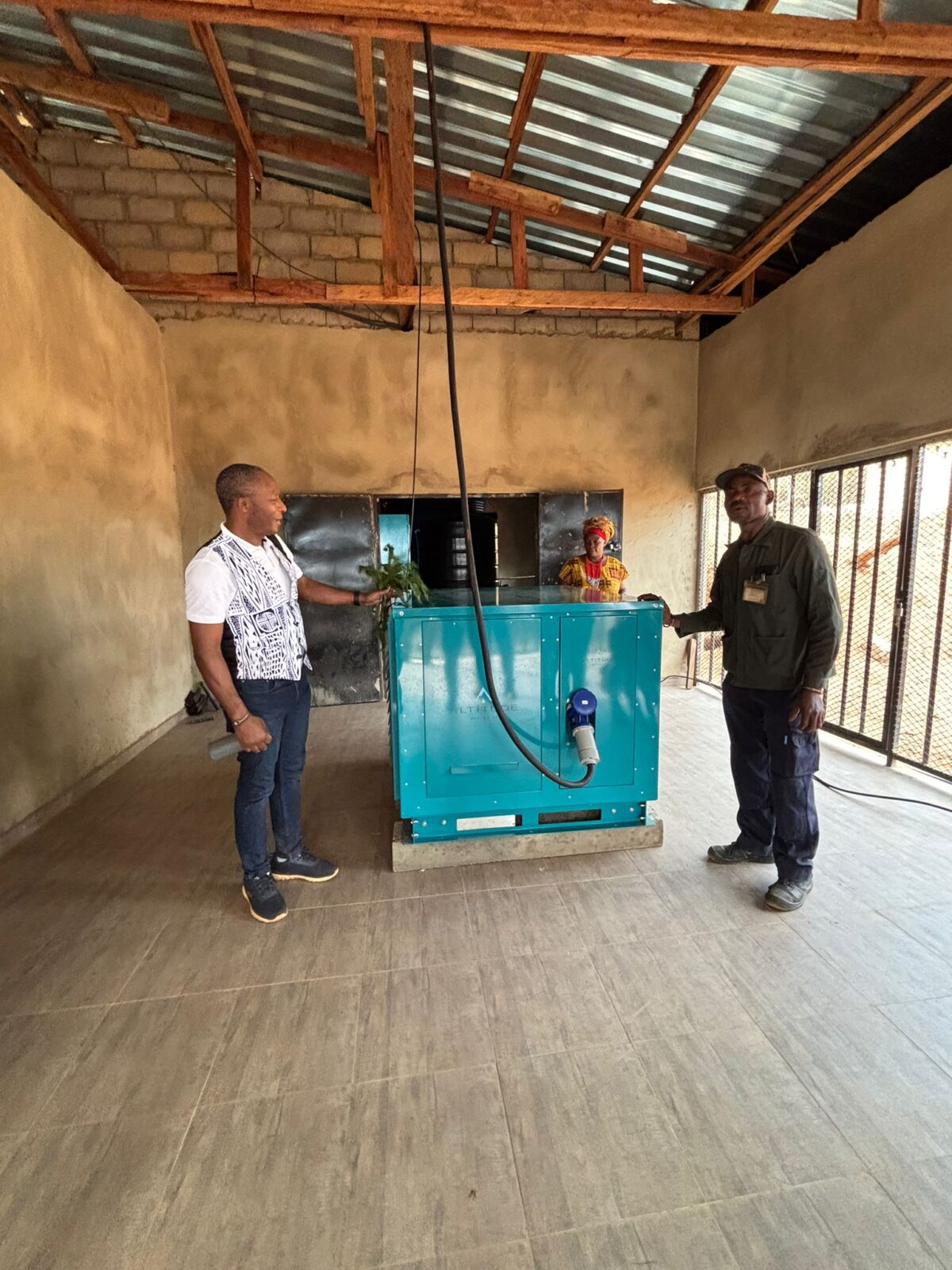
Once viewed as experimental technology, Atmospheric Water Generators (AWGs) are rapidly becoming mainstream. These innovative machines extract moisture directly from the air, filter it, and produce pure drinking water—free from contamination, infrastructure dependence, or plastic waste.

What was once seen as niche or futuristic is now being recognized as a critical pillar in global water security. The latest data proves it.

The Market Has Spoken: AWGs Are Going Mainstream

According to Global Market Insights, the global Atmospheric Water Generator market—valued at USD 2.7 billion in 2024—is expected to more than double to USD 6.7 billion by 2034, growing at a compound annual growth rate (CAGR) of 9.5% (Global Market Insights Report).

A separate analysis by Future Market Insights forecasts the AWG industry to reach USD 6.5 billion by 2035, with North America leading global adoption (Future Market Insights).

Why? Because traditional water systems — from aging municipal pipelines to polluted groundwater sources — are increasingly unreliable, and consumers are seeking independence from them.

What’s Driving the Explosion in Demand

Three powerful global forces are converging to push AWGs into the mainstream:

1️⃣ The Water Contamination Crisis

From lead in Flint, Michigan, to PFAS “forever chemicals” found in the tap water of 165 million Americans, contamination is pushing people to seek safe alternatives.

The Environmental Working Group (EWG) revealed in 2025 that over 60% of tested U.S. water systems contained PFAS levels above federal safety limits (EWG 2025 Report).

Atmospheric Water Generators completely bypass contaminated systems. By drawing water vapor directly from air, then filtering it through activated carbon, UV light, and mineralization, AWGs deliver water that’s naturally pure and safe to drink.

2️⃣ Climate Change & Drought

Across the American Southwest, prolonged droughts and declining groundwater levels are redefining how communities think about water. California, Texas, and Arizona face increasing pressure to diversify water sources as lakes and aquifers continue to shrink.

AWGs solve this problem elegantly — they create fresh water anywhere, without drilling wells, tapping rivers, or transporting plastic bottles.

With the U.S. entering an era of climate resilience, devices that ensure local, renewable water are becoming indispensable.

3️⃣ The Sustainability Movement

As the world races toward net-zero goals, businesses and consumers alike are seeking sustainable alternatives to plastic-heavy, energy-intensive water systems.

Each year, Americans discard more than 60 million plastic water bottles, most of which end up in landfills or oceans (EPA Plastic Waste Data).

By replacing bottled water and reducing carbon-intensive transportation, AWGs deliver sustainability and savings.

Altitude Water’s AWG systems eliminate up to 10,000 single-use plastic bottles per household each year.

Who’s Buying AWGs in 2025 — and Why

The AWG boom is not just residential. Across industries, organizations are embracing AWGs as part of their operational and sustainability strategies:

🏨 Hospitality & Tourism

Hotels and resorts are replacing bottled water with AWGs to enhance their eco-friendly credentials and reduce supply-chain dependency.

🏢 Corporate Offices

Businesses use AWGs to provide healthy hydration for employees while demonstrating environmental leadership — a growing trend in ESG reporting.

🏥 Hospitals & Healthcare

Medical facilities require consistent access to purified water; AWGs deliver it safely and autonomously.

🏫 Educational Institutions

Universities and schools are installing AWGs as part of climate-education initiatives and cost-saving green upgrades.

🏠 Homes & Small Businesses

Consumers want control. Instead of relying on uncertain municipal supply, they’re opting for devices that make clean water from the air itself.

The Economics of Water Independence

The economics of AWGs are becoming increasingly attractive. As technology efficiency rises, the cost per liter of AWG water has fallen by nearly 40% since 2020.

While bottled water averages $1.50 to $2.00 per liter, most AWGs now generate water for under 25 cents per liter over their lifecycle — and prices continue to decline.

For businesses, this means ROI within two years and an environmental story that resonates with consumers.

Altitude Water customers report reducing bottled-water purchases by over 90% within the first month of installation.

The Technology Driving the Growth

Modern AWGs combine physics, material science, and renewable energy. Key innovations include:

  • Hybrid Condensation Systems: Operate efficiently across varied humidity and temperature levels.

  • Smart Energy Management: Sensors regulate cooling cycles for minimal power consumption.

  • Integrated Solar Options: Off-grid systems for remote or disaster-prone areas.

  • Real-Time Monitoring: IoT-based dashboards track output, humidity, and purity.

Altitude Water’s latest systems are equipped with AI-driven controls to optimize water production dynamically based on local climate data.

2025: The Tipping Point for AWGs

2025 isn’t just another year — it’s the year AWGs become essential.

From government funding for sustainable water systems to corporate ESG initiatives, all indicators point toward mass adoption. Even the United Nations Environment Programme (UNEP) has identified atmospheric water capture as a key innovation in the fight against water scarcity.

With rising demand and falling costs, the future of clean water is shifting from underground pipelines to air-based ecosystems — decentralized, efficient, and sustainable.

The Altitude Water Advantage

At Altitude Water, we’re not just following the AWG revolution — we’re leading it.

Our systems are engineered for:

  • Scalability — From single-family homes to industrial complexes

  • Reliability — Designed to perform in both humid and arid environments

  • Purity — Multi-stage filtration ensures consistently clean water

  • Sustainability — Zero waste, zero dependence on bottled water

Water Independence Starts Here.

👉 Explore our complete range of AWG systems at altdwater.com and discover how you can own your water future.